Real estate investment is often framed as a safe harbor for generational wealth. You purchase a premium asset, expecting it to appreciate steadily over decades. Yet, beneath the polished marble floors and imported Italian fixtures lies a silent, structural threat. This geological hazard is known as the black cotton soil trap.
This volatile earth composition acts as a slow-moving financial sinkhole. It compromises the very foundation of your high-value property. Unscrupulous developers frequently ignore soil testing mandates to accelerate construction timelines. They deploy cheap, shallow foundations on unstable ground. The result is a structurally compromised building that begins to sink, tilt, or fracture within its first few years of existence.
You are stepping into a zone of asymmetric warfare. Developers hold the engineering blueprints, the soil reports, and the structural data. Buyers are left blind, trusting glossy brochures over geological facts. Understanding the black cotton soil trap is no longer optional. It is a mandatory defensive strategy for any serious real estate investor looking to protect their capital from sudden erosion.
The Anatomy of the Black Cotton Soil Trap
Black cotton soil is notoriously common across central and western India. It is highly prized for agriculture but presents a catastrophic engineering challenge for high-rise construction. The core issue lies in its high percentage of montmorillonite clay. This specific mineral structure causes the soil to expand violently when exposed to moisture.
During the monsoon season, this soil swells dramatically. It exerts massive upward pressure on building foundations. This phenomenon is known as soil heave. Conversely, during the dry summer months, the soil loses moisture and shrinks rapidly. This creates deep fissures and underground voids. The foundation loses its critical support structure, causing the building to settle unevenly.
The Physics of Structural Failure
This continuous cycle of swelling and shrinking acts like a geological hydraulic press. It relentlessly flexes the concrete and steel of a building’s substructure. Over time, this cyclical stress exceeds the tensile strength of standard construction materials. The building begins to tear itself apart from the ground up.
- Differential Settlement: One side of the building sinks faster than the other.
- Foundation Shearing: Concrete footings snap under the immense lateral pressure.
- Load-Bearing Compromise: Primary support pillars lose their vertical alignment.
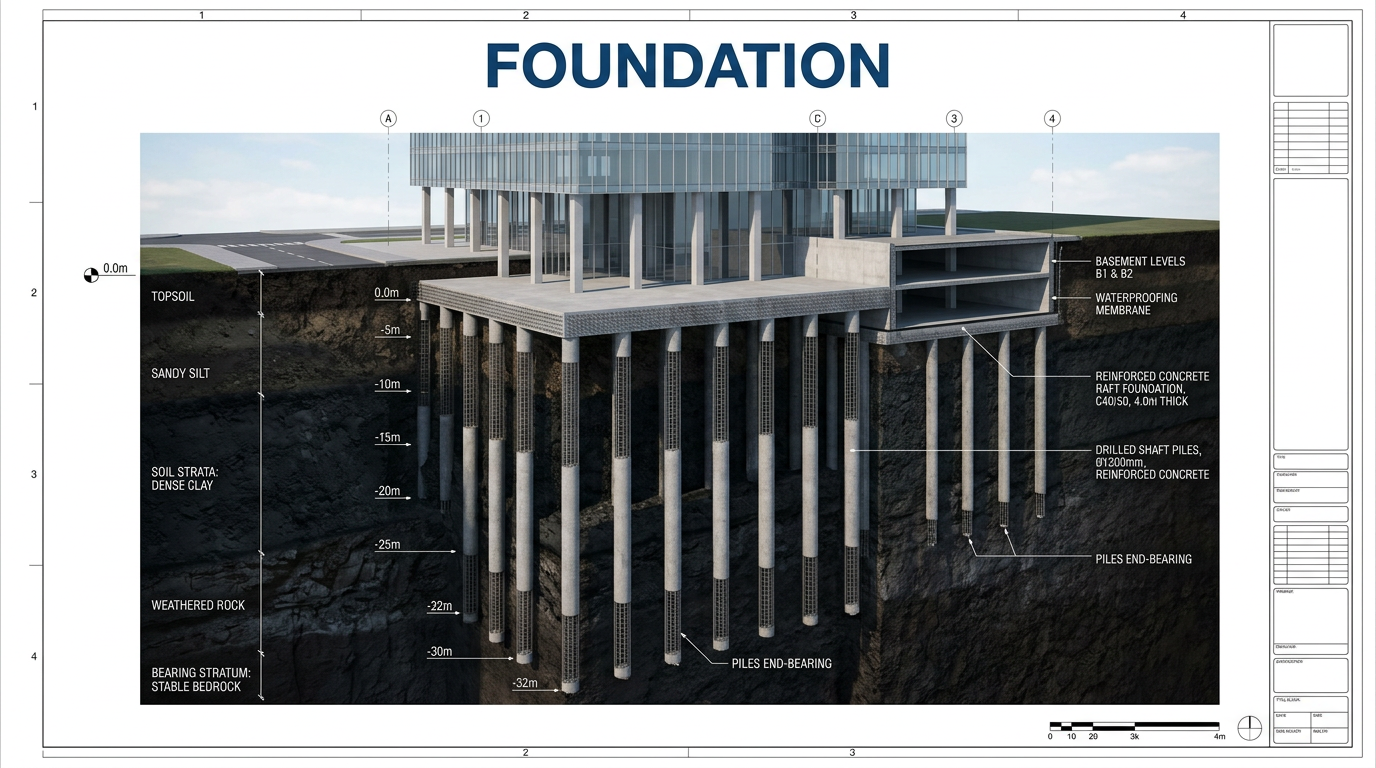
Developers are fully aware of these geological mechanics. Proper engineering requires deep pile foundations that bypass the volatile topsoil entirely. These piles must anchor firmly into the solid bedrock below. However, deep piling is expensive and time-consuming. Profit-driven builders often opt for shallow raft foundations, walking their buyers directly into the black cotton soil trap.
The 5-Year Ticking Clock: Section 14(3) of RERA

The Indian legal framework provides a specific shield against this exact form of structural negligence. However, this shield comes with a strict expiration date. Under Section 14(3) of the Real Estate (Regulation and Development) Act, 2016, promoters are held strictly liable for foundational integrity. They must rectify any structural defects or defects in workmanship at no extra charge.
This powerful legislation encompasses foundational failures like sinking or cracking caused by poor engineering on volatile ground. But there is a catch. This liability is only enforceable if the defect is brought to the promoter’s notice within 5 years from the date of handing over possession. This 5-year window is a critical battleground for the black cotton soil trap.
The Developer’s Waiting Game
Substandard foundations rarely collapse overnight. The swelling and shrinking of black cotton soil take multiple seasonal cycles to manifest as visible structural damage. Developers often employ cosmetic fixes during the initial years. They patch drywall cracks and realign jamming doors without addressing the sinking foundation.
Their objective is simple. They want to run out the 5-year clock mandated by MahaRERA and the national framework. Once that 60-month threshold is crossed, the financial burden of a sinking building shifts entirely to the housing society. Homeowners are suddenly faced with multi-crore structural retrofitting bills, effectively destroying the asset’s resale value.
Developer Manipulations and Substandard Foundations

The black cotton soil trap is not an accident. It is often the result of calculated financial manipulation. To maximize project margins, developers routinely weaponize information asymmetry. They obscure soil testing reports from prospective buyers. They bury critical engineering compromises deep within technical annexures that standard lawyers rarely scrutinize.
A proper geotechnical investigation is the first line of defense. It dictates the required depth and diameter of the foundation piles. Yet, many builders commission favorable soil reports from compromised laboratories. These fabricated reports downplay the swelling index of the soil. This allows the builder to legally justify cheaper, shallower foundations to municipal planning authorities.
The Illusion of Premium Construction
Buyers are systematically distracted by superficial luxury. Developers pour capital into imported Italian marble, smart home automation, and lavish clubhouse amenities. These highly visible features command premium pricing per square foot. Meanwhile, the invisible foundation—the actual structural core of the asset—is starved of capital.
This is a classic asset defense scenario. You must look past the cosmetic upgrades. You must demand transparency regarding the substructure. If a developer refuses to share the detailed geotechnical report or the structural engineer’s foundation design, consider it a massive red flag. Your wealth is being positioned on a geological fault line. [INTERNAL LINK: Structural Audit Essentials]
Spotting the Red Flags Before You Buy

Defeating the black cotton soil trap requires proactive intelligence gathering. You cannot wait for the building to tilt before taking action. You must identify the subtle symptoms of differential settlement early in the investment lifecycle. Whether you are buying a newly constructed villa or a five-year-old apartment, specific visual cues indicate foundational movement.
Never rely solely on the developer’s handover inspection. Bring in independent structural intelligence. Look for the physical manifestations of the soil expanding and contracting beneath the concrete.
Critical Structural Indicators
Inspect the property meticulously for these specific engineering failures:
- Diagonal Wall Fissures: Cracks that run at a 45-degree angle from the corners of windows and doors indicate the foundation is dropping on one side.
- Misaligned Joinery: Doors and windows that suddenly stick or fail to latch properly are classic signs of a shifting structural frame.
- Floor Separation: Gaps appearing between the skirting boards and the floor tiles suggest the concrete slab is bowing downward.
- Exterior Brickwork Cracks: Stair-step cracking in exterior masonry is a definitive symptom of a compromised footing.
If you observe these indicators within the first few years of completion, the 5-year RERA clock is already ticking. Immediate legal and structural intervention is required. You must force the developer’s hand before the statutory liability period expires, as mandated by the Supreme Court interpretations of consumer protection laws. [INTERNAL LINK: Navigating RERA Claims]
The BlockRestate Solution: Impenetrable Asset Defense

The real estate market is engineered to keep buyers blind to structural risks. BlockRestate shatters this asymmetry through an impenetrable enterprise trust layer. We do not rely on developer-provided brochures or compromised local inspections. We deploy a proprietary, black-box verification architecture designed to secure your asset from the ground up.
Our process begins with the On-Ground Runner. This local verification personnel physically visits the property to capture raw, unedited video walkthrough evidence of the physical spatial dimensions. This raw footage is immediately intercepted by our AI Sentinel. Acting as an advanced server-side middleware, the AI Sentinel automatically applies stringent data privacy filters, including facial blurring, ensuring total compliance with the DPDP Act, 2023. It simultaneously executes automated deepfake and tamper scans to guarantee the visual data is authentic.
Decentralized Verification and Immutable Records
The sanitized footage is then routed to our 3-Person Anonymous Jury. This decentralized pool of independent reviewers evaluates the visual evidence by answering system-generated questions, effectively eliminating localized bribery. Concurrently, an Independent Lawyer and an Independent Engineer conduct separate, objective evaluations of the asset. They submit their professional reports directly into our secure system.
All data converges in the Consensus Validation Vault (CVV). Here, the independent reports and Garvi Index-2 receipts are securely reconciled and cross-verified against official statutory government databases, such as the IGRS. Once cryptographic validation is achieved, the final property audit is sealed using Arweave & Polygon Dynamic NFTs, creating a permanent, tamper-proof digital record.
Automated Financial Routing via Razorpay
BlockRestate ensures total operational integrity through automated Razorpay Escrow and Smart Collect systems. When a client purchases an audit package, the payment is held securely in a Razorpay Escrow account. Internal payouts are dynamically routed to the on-ground runner, the independent field engineer, the reviewing lawyer, and the decentralized jurors strictly after their individual validation tasks are verified. BlockRestate manages these internal verification logistics exclusively; we never hold homebuyers’ property purchase money or manage builder construction capital.
For forward-thinking developers seeking to optimize project cash flows, BlockRestate offers an exclusive 4-to-6 month zero-interest installment plan via Razorpay Smart Collect. This provides maximum financial flexibility while covering the cost of comprehensive verification packages, ensuring total structural transparency for the end buyer.
Conclusion
The black cotton soil trap is a severe threat to generational wealth. It is a geological reality that developers often exploit to maximize their margins at your expense. By understanding the mechanics of expansive soils, recognizing the structural red flags, and leveraging the 5-year liability window under Section 14(3) of RERA, you can defend your investment.
Do not leave your financial future to chance or compromised developer reports. Deploy professional, decentralized intelligence to verify the structural integrity of your asset before you sign the final deed. Secure your capital, demand engineering transparency, and utilize BlockRestate’s immutable verification architecture to ensure your premium property stands on solid ground for decades to come.