Imagine investing significant capital into a premium high-rise residential project. The developer hands over the keys to your new apartment. You move your family in immediately. Six months later, municipal authorities arrive at your doorstep with official eviction notices.
Why does this happen? You confused the legal right to build with the legal right to reside. This scenario plays out daily across India’s rapidly expanding real estate landscape. Buyers fundamentally misunderstand the core OC vs CC difference.
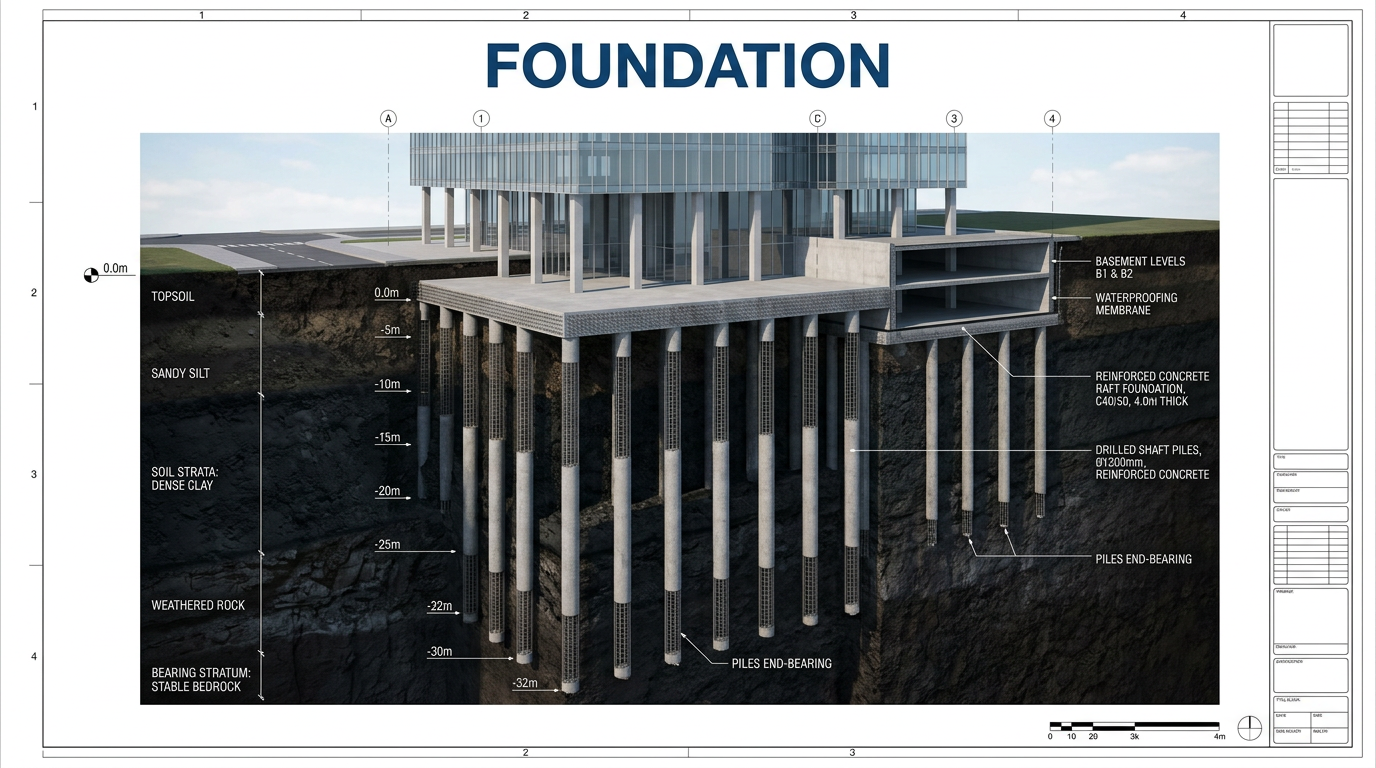
A Commencement Certificate (CC) merely allows the builder to dig the foundation. An Occupancy Certificate (OC) proves the building is legally safe for human habitation. Let us break down this critical distinction to protect your next major property investment.
The Commencement Certificate: The Permission to Dig
A Commencement Certificate represents the very first legal milestone for any real estate developer. Local municipal bodies issue this mandatory document. It signals that the builder has successfully cleared initial land titles and zoning laws.
Without a valid CC, any construction activity on the site is entirely illegal. Authorities can demolish unauthorized structures built without this primary approval. Buyers must demand to see this document before booking an under-construction flat.
Stages of the Commencement Certificate
Municipalities do not always grant a complete CC on the first day. Builders often receive this authorization in distinct, heavily monitored phases. Understanding these phases clarifies the OC vs CC difference.
- Plinth Level Approval: The builder gets clearance to construct only up to the ground floor level.
- Superstructure Approval: Municipal engineers inspect the foundation before allowing vertical tower construction.
- Floor-by-Floor Clearance: High-rise projects often require incremental approvals as the building ascends.
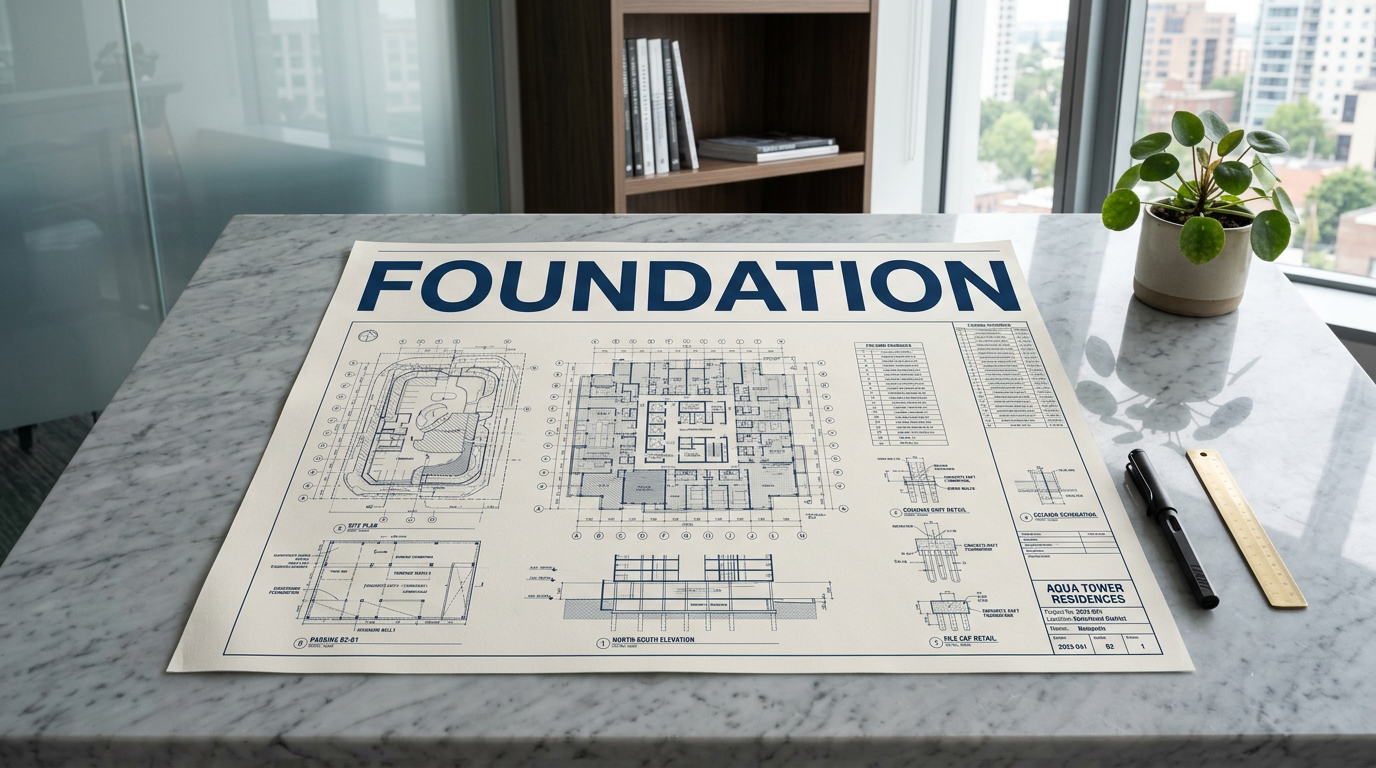
The CC validates land ownership and strict zoning compliance. It officially approves the initial architectural blueprint. It grants the developer the legal right to begin laying the structural foundation.
The Occupancy Certificate: The Permission to Live

Fast forward to the final stages of project completion. The builder must now obtain the Occupancy Certificate. This document serves as the ultimate proof of legal compliance.
It certifies that the developer constructed the building exactly according to the originally approved master plans. The OC vs CC difference becomes glaringly obvious at this exact stage. A CC starts the construction journey safely.
An OC safely concludes that journey. Municipal authorities conduct rigorous inspections before issuing an OC. They check fire safety systems, structural integrity, and basic civic amenities.
Why the OC is Absolutely Non-Negotiable
Without an Occupancy Certificate, the building does not officially exist in municipal residential records. You are technically occupying a construction site. This exposes you to severe legal and financial liabilities.
- Code Adherence: Confirms strict adherence to national building codes and safety regulations.
- Fire Safety: Validates the proper installation of mandatory fire suppression protocols.
- Civic Utilities: Authorizes permanent, legal electricity and municipal water connections.
Living in a property without an OC is a direct statutory violation. Local authorities hold the power to classify the structure as unauthorized. They can mandate immediate evacuation.
Legal Risks of Ignoring the OC vs CC Difference

Many eager homebuyers accept possession on a temporary fit-out basis. They rely solely on the existence of the CC. This represents a catastrophic financial mistake.
The Supreme Court of India has repeatedly ruled against this dangerous practice. The apex court maintains that offering possession without an OC violates basic consumer rights. Buyers must reject fit-out possession offers entirely.
Municipalities treat non-OC residents as illegal occupants. They can disconnect essential water and electricity supplies without prior notice. Authorities charge commercial rates for utilities if they allow connections at all.
The Hidden Financial Penalties
The financial ramifications extend far beyond utility bills. Banks will actively reject your home loan refinance applications. Financial institutions require a valid OC to process favorable interest rates.
You cannot legally sell the property later without this vital document. Secondary market buyers demand clear titles. [INTERNAL LINK: Property Resale Without OC]. Your asset becomes highly illiquid.
Property insurance policies also become void. Insurance companies will deny claims for fire or structural damage if the building lacks an OC. You carry the entire risk burden alone.
How Builders Exploit the OC vs CC Difference

Unscrupulous developers frequently use the CC to create a false sense of security. They confidently show buyers the initial project registration documents. They present the CC as definitive proof of total legitimacy.
However, initial registration only means the project is officially listed. It does not guarantee the successful procurement of the final OC. RERA actively warns homebuyers about this deceptive sales tactic.
Builders often cite minor bureaucratic delays to excuse the missing OC. They urge buyers to sign indemnity bonds and take early possession. These bonds legally shift the liability from the builder to the homebuyer.
The Phased Development Trap
Developers frequently launch massive residential townships in multiple phases. They secure a blanket CC for the entire land parcel. They finish Tower A and hand over the keys.
They claim they are waiting to finish Tower B before applying for the OC. Buyers fall into this administrative trap daily. You must demand a partial OC for your specific tower.
Do not accept keys based on future promises. The OC vs CC difference dictates that you wait for the final municipal clearance. Your legal safety depends entirely on this patience.
The BlockRestate Solution: Immutable Verification Architecture

The Indian real estate market requires an impenetrable enterprise trust layer. BlockRestate delivers this through a decentralized, cryptographic audit ecosystem. We permanently eliminate the ambiguity surrounding the OC vs CC difference.
Our proprietary infrastructure ensures complete institutional transparency. We achieve this without ever compromising consumer data privacy. Our verification protocols protect both meticulous developers and cautious investors.
The Decentralized Audit Workflow
We deploy an On-Ground Runner directly to the physical property asset. This local verification personnel captures raw, unedited video walkthrough evidence. They document the exact physical spatial dimensions and current construction status.
Our AI Sentinel immediately processes this raw footage. This advanced server-side middleware automatically applies strict data privacy filters, such as facial blurring. It ensures absolute compliance with the DPDP Act, 2023.
The AI Sentinel also executes automated deepfake and tamper scans. Next, a 3-Person Anonymous Jury reviews the footage. This decentralized pool of independent reviewers exclusively watches the privacy-compliant video.
They evaluate the asset by answering specific, system-generated questions based solely on the visual evidence. This blind review process effectively neutralizes any localized bribery attempts.
Independent Evaluation and the CVV
Concurrently, an Independent Lawyer and an Independent Engineer evaluate the asset. They submit separate, highly detailed professional reports directly to the system. These critical reports converge securely in our Consensus Validation Vault (CVV).
The CVV acts as an institutional enterprise vault. It reconciles the independent reports alongside verified Garvi Index-2 receipts. The CVV cross-verifies this data directly against official statutory government databases, such as the IGRS.
Final cryptographic validation occurs exclusively via Arweave & Polygon Dynamic NFTs. This creates a permanent, tamper-proof digital record of property audits and title histories.
Automated Financial Routing via Razorpay
BlockRestate exclusively uses automated Razorpay Escrow and Smart Collect systems to manage internal operational pipelines. When a client purchases a BlockRestate audit package, the payment routes directly into a secure Razorpay Escrow account.
Internal payouts are dynamically routed to the on-ground runner, the independent field engineer, the reviewing lawyer, and the decentralized jurors. These payouts trigger only after specific individual validation tasks are completed.
BlockRestate never holds homebuyers’ property purchase money. We never handle escrow for home sales. We never manage builders’ project construction capital. We remain strictly third-party auditors managing internal verification logistics.
The Builder’s Financial Flexibility
Forward-thinking developers can highly optimize their project cash flows. They can utilize an exclusive 4-to-6 month zero-interest installment plan via Razorpay Smart Collect.
This flexible financial routing covers the entire cost of their comprehensive BlockRestate verification packages. It empowers transparent builders to prove their credibility without straining immediate operational capital.
Conclusion
Understanding the OC vs CC difference remains your strongest defense against real estate litigation. A Commencement Certificate confirms the developer has the legal permission to dig the foundation.
An Occupancy Certificate confirms you have the legal permission to live in the completed structure. Never compromise on the final OC. Never accept fit-out possession based solely on a CC.
Always verify the statutory documents before moving your family into a new property. Leverage institutional-grade verification systems to ensure your investment remains legally sound and financially secure.