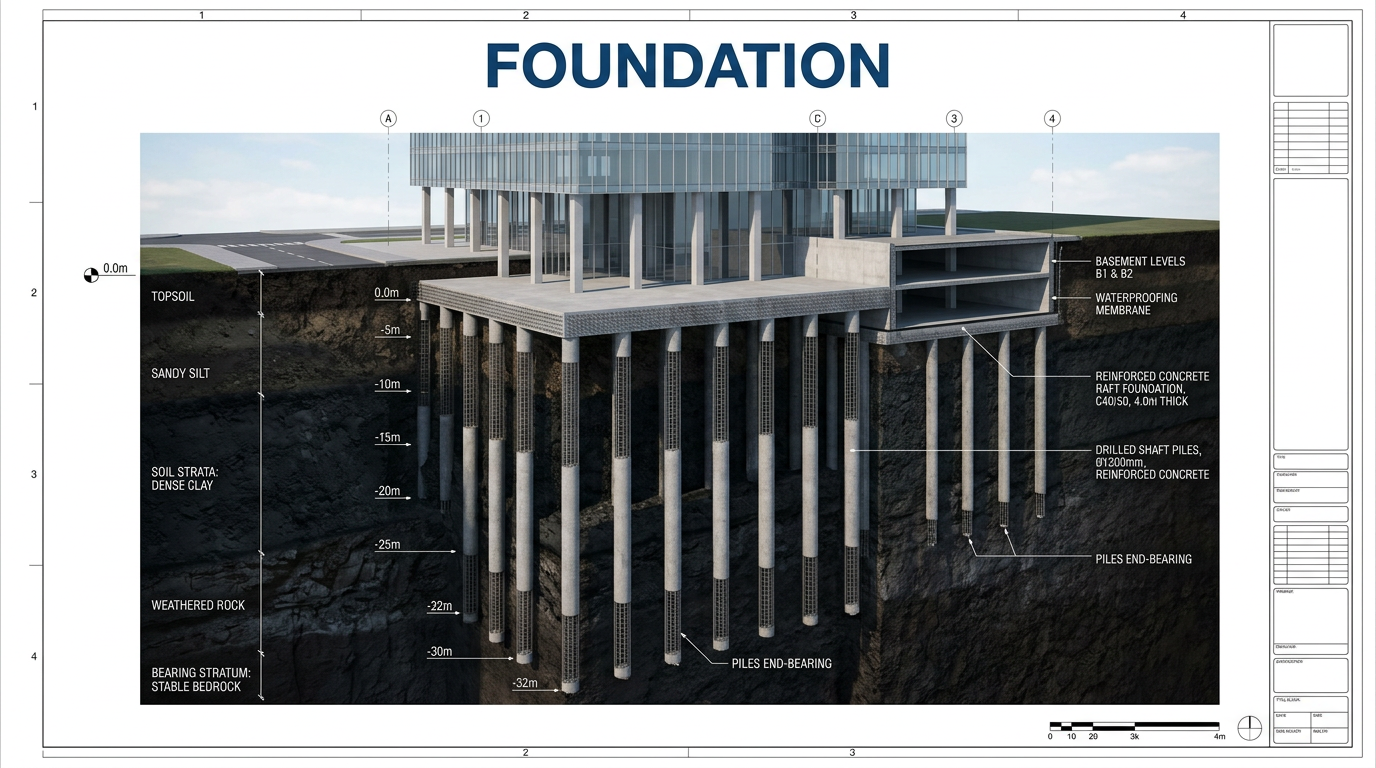
You sign the papers for a luxurious new apartment. Months later, you finally step into your new living room. The space feels incredibly cramped. It barely fits a standard luxury sofa. Where did the missing square footage go?
It vanished entirely into the infamous loading factor scam. Indian real estate thrives on this mathematical illusion. Buyers pay massive premiums for sprawling dimensions. However, they receive a mere fraction of the promised livability.
Imagine paying ₹10,000 per square foot for a 1,500 square foot home. You invest ₹1.5 Crores expecting a spacious haven. Instead, you receive exactly 950 square feet of actual livable space. You just lost ₹55 Lakhs to empty air.
Understanding the fundamental difference between carpet area and super built-up area remains absolutely crucial. It actively separates savvy investors from victims of spatial theft. The loading factor scam silently drains your generational wealth. Learn more about our secure operational ecosystem in the [Download Free PDF guide] and [Download Free Audio Podcast guide].
The Illusion of Space: Decoding Super Built-up Area

Developers historically sold properties based exclusively on super built-up area. This specific metric includes your actual apartment dimensions. It also adds a proportionate share of common residential amenities.
Think of expansive lobbies, winding staircases, elevator shafts, and sprawling clubhouses. Constructing these grand communal spaces requires massive capital. The super built-up concept originally emerged as a standard recovery mechanism.
It allowed developers to distribute heavy construction costs across all buyers. However, this legitimate cost-recovery tool quickly morphed into a profit-generating weapon. Unregulated loading percentages became the dark industry norm.
Components Often Hidden in the Loading Factor
- Elevator lobbies and shared residential corridors.
- Maintenance rooms and underground electrical shafts.
- Terrace spaces strictly designated for communal use.
- Security cabins and basement parking entryways.
The loading factor represents the exact percentage added to your usable space. A 30% loading factor means a 1,000 square foot home is marketed as 1,300 square feet. This practice intentionally obscures the actual livable dimensions.
Buyers unknowingly finance the construction of communal assets twice. First, they pay heavily through the inflated base property price. Second, they pay through ongoing monthly maintenance charges.
These recurring maintenance fees are calculated directly on the inflated super built-up total. This creates a permanent financial drain on the homeowner.
RERA’s Carpet Area Mandate: Your Legal Shield
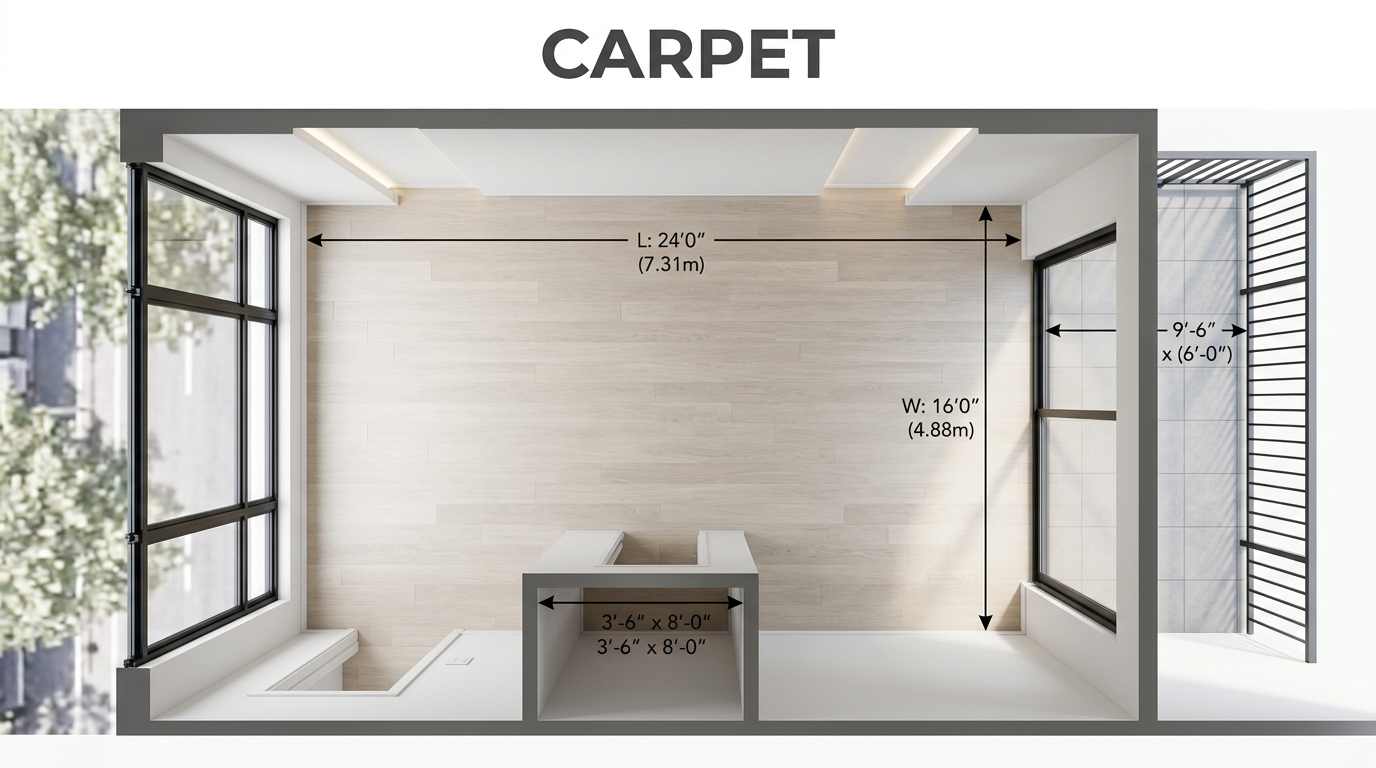
The Real Estate (Regulation and Development) Act brought sweeping changes to spatial transparency. RERA strictly defines carpet area as the net usable floor area of an apartment. It measures the exact physical space where you can lay a carpet.
This strict definition entirely excludes external walls, internal service shafts, and exclusive balconies. Developers must now legally quote property prices based exclusively on this precise metric. You can review the official guidelines directly on the MahaRERA official portal.
Carpet area pricing forces absolute market transparency. It strips away the traditional illusion of grandeur. Buyers finally see exactly what physical asset they are purchasing.
Why the Carpet Area Metric is Non-Negotiable
- It provides a standardized benchmark for comparing different projects.
- It prevents the arbitrary inflation of common area dimensions.
- It ensures property taxes align with actual usable space.
This regulatory shift severely disrupted traditional developer sales pitches. A project priced at ₹8,000 per square foot on super built-up area looks cheap. That same project suddenly costs ₹12,000 per square foot on carpet area.
The total apartment cost remains completely identical. However, the psychological sticker shock deters many uninformed buyers. Therefore, rogue developers still actively search for regulatory loopholes.
They verbally pitch the super built-up area during physical site visits. This makes the per-square-foot price appear artificially low. This deceptive marketing tactic easily misleads eager first-time buyers.
Mechanics of the Loading Factor Scam

How does the loading factor scam survive in a highly regulated market? It relies heavily on engineered information asymmetry. Developers possess the complex, legally binding architectural blueprints.
Buyers generally only see the simplified, artistic floor plans printed in glossy brochures. Sales teams ruthlessly exploit this knowledge gap. They highlight the massive super built-up figure during the initial sales pitch.
They deliberately bury the actual carpet area deep in the fine print of the allotment letter. By the time the buyer realizes the spatial discrepancy, their booking amount is already locked.
Spotting the Red Flags in Developer Pitches
- Marketing materials completely lacking exact carpet area dimensions.
- Sales teams refusing to share the RERA-approved architectural blueprint.
- Unexplained discrepancies between the brochure and the registered agreement.
- Unusually low per-square-foot pricing compared to the local micro-market average.
Developers routinely inflate the loading percentage from a standard 25% to an exorbitant 45%. You end up paying ultra-luxury rates for thin air. The Supreme Court of India has repeatedly ruled against such deceptive real estate practices.
Yet, the ultimate burden of spatial verification still falls heavily on the individual buyer. Always demand the official RERA-approved floor plan before signing any term sheet. Compare the quoted dimensions directly with the registered documents.
You must actively verify every single square foot you intend to purchase. Read more about protecting your capital investments in our comprehensive guide on [Download Free PDF guide] and [Download Free Audio Podcast guide].
BlockRestate Ecosystem: Eradicating the Loading Factor Scam

Physical spatial verification requires absolute, uncompromised objectivity. BlockRestate deploys a proprietary enterprise trust layer to dismantle the loading factor scam completely. We eliminate all human bias from the physical auditing process.
Our sophisticated system operates as an impenetrable black-box verification engine. We ensure that the carpet area promised is the exact carpet area delivered. Here is how our high-level infrastructure secures your investment.
The Enterprise Trust Layer Architecture
- On-Ground Runner: Local verification personnel physically visit the property asset. They capture raw, unedited video walkthrough evidence of the physical spatial dimensions and layout.
- AI Sentinel: Advanced server-side middleware processes the runner’s raw footage before human evaluation. It automatically applies data privacy filters, like facial blurring, for strict compliance with the DPDP Act, 2023. It also executes automated deepfake and tamper scans.
- 3-Person Anonymous Jury: A decentralized pool of independent reviewers exclusively watches the privacy-compliant video. They evaluate the footage by answering specific, system-generated questions based solely on visual evidence to prevent localized bribery.
- Independent Lawyer & Engineer: Separate technical and legal professionals independently evaluate the asset. They submit separate, objective professional reports directly into our secure system.
- Consensus Validation Vault (CVV): An institutional enterprise vault securely reconciles the separate reports alongside Garvi Index-2 receipts. It cross-verifies them directly against official statutory government databases, such as the IGRS, before final cryptographic validation.
- Immutable Records: We utilize Arweave and Polygon Dynamic NFTs. This permanent, decentralized vault architecture records immutable property audits and title histories, ensuring a tamper-proof digital record.
This multi-layered approach makes spatial deception mathematically impossible. The physical reality of the asset is cryptographically locked into the blockchain. Developers can no longer hide behind inflated super built-up numbers.
Operational Integrity and Financial Flexibility

BlockRestate strictly separates technical auditing operations from property transaction capital. We firmly maintain our position as objective third-party auditors. We are strictly managing internal verification logistics.
We never hold homebuyers’ property purchase money. We never handle escrow accounts for home sales. We absolutely do not manage builders’ project construction capital. Our financial routing exists solely to power our internal verification pipelines.
Secure Internal Routing via Razorpay
- BlockRestate uses automated Razorpay Escrow and Smart Collect systems exclusively to manage internal operations.
- Client audit payments go directly into a highly secure Razorpay Escrow account.
- Internal payouts dynamically route to the on-ground runner, independent field engineer, reviewing lawyer, and decentralized jurors.
- These specific payouts trigger only after their individual validation tasks are successfully completed.
This financial architecture ensures complete operational transparency across our network. It properly incentivizes accurate, timely audits without ever compromising the integrity of the capital. Furthermore, we offer significant financial flexibility to institutional partners.
Forward-thinking developers can effectively optimize their project cash flows. They can utilize an exclusive 4-to-6 month zero-interest installment plan via Razorpay Smart Collect. This specifically covers the cost of their comprehensive BlockRestate verification packages.
This empowers honest developers to showcase verified carpet areas without immediate cash flow strain. Learn more about our secure operational ecosystem in the [Download Free PDF guide] and [Download Free Audio Podcast guide].
The era of the loading factor scam is rapidly coming to an end. Data-backed spatial verification is the new industry standard. Protect your capital by demanding absolute spatial truth today.